
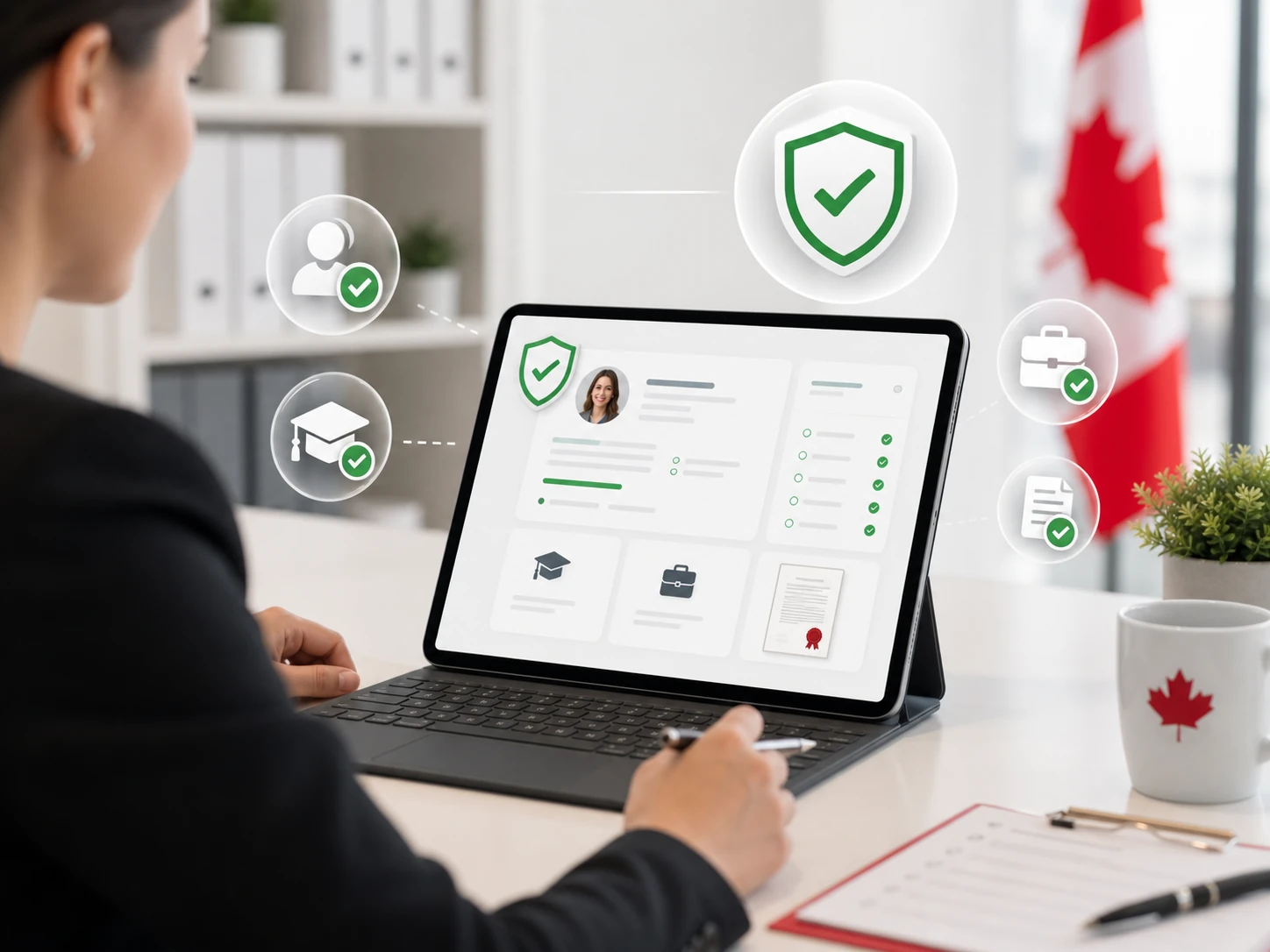
The fastest way to verify a candidate's skills before the interview is to ask them to show the skill instead of describing it. Use structured screening questions, a short work sample or skills test, and a verified certificate or credential to build your shortlist. Then run reference and background checks, with the candidate's consent, on the people you are serious about.
Why the resume is the weakest part of your process
Resume claims cost nothing to write. "Advanced Excel" and "strong client communication" appear on strong and weak resumes alike. Interviews are expensive, and a bad hire costs more.
At START, I see the other half of the problem. Many capable newcomers and career changers have the skill but can't prove it on paper, so they get filtered out early. A good verification process catches inflated claims and gives quiet, capable people a fair way in.
What the research says about predicting job performance
For decades, hiring research leaned on Schmidt and Hunter's 1998 meta-analysis of selection methods. In 2022, a team led by Paul Sackett revisited those numbers and found that earlier corrections had overestimated how well most methods predict performance. As HumRRO summarizes the 2022 paper, structured interviews came out on top with a mean validity of .42. Job knowledge tests scored .40, work sample tests .33 and cognitive ability .31.
These are modest averages across many jobs, and HumRRO notes that structured interview results vary between studies. The practical lesson still holds: the same job-related questions for everyone, scored the same way, plus evidence of real work, give you a better signal than a friendly, unscripted chat.
A practical toolkit for checking skills
Structured screening questions
The US Office of Personnel Management describes a structured interview as one where all candidates get the same predetermined questions in the same order, rated on the same scale. Apply that to a screening form or a short phone screen.
Write three to five questions tied to the actual work. For a bookkeeper: "Walk me through how you would find why a bank reconciliation is off." Decide what a strong, average and weak answer looks like before you read any.
Work samples and short paid tasks
A work sample is a small slice of the job. A customer service candidate replies to three anonymized customer emails. A junior developer fixes a bug in a sample repository. Keep unpaid tasks under an hour. If the task runs longer, or produces work you could use, pay for it.
Skills tests you run yourself
Job knowledge tests ranked second in the 2022 re-analysis, and they are easy to run: a spreadsheet task for an analyst, or a safety knowledge check for a warehouse lead. Give every candidate the same test, and offer accommodations when asked.
Reference checks done well
Vague questions get vague answers. Ask about behaviour: "What did they own on that project?" or "What would you have wanted them to improve?" Confirm dates and title against the resume.
Get permission first. In a 2007 PIPEDA case summary, the Office of the Privacy Commissioner of Canada said a prospective employer should obtain the applicant's express consent before contacting former employers.
Credential verification
For a Canadian degree or diploma, contact the issuing institution's registrar with the candidate's written consent. For regulated jobs, check the provincial regulator's public register.
For foreign credentials, ask for an evaluation from World Education Services, which says its evaluations help hiring managers identify the right talent. If you aren't sure who recognizes a credential, the Canadian Information Centre for International Credentials, part of the Council of Ministers of Education, Canada, helps identify the organization responsible for recognition.
Background checks with consent
Match the check to the role. A driving job justifies a driver abstract. Most office roles don't need a credit summary.
The Privacy Commissioner's guidance on employee records says employers may only collect the personal information necessary for the purpose they have identified, with knowledge and consent. That guidance covers federally regulated employers, and Alberta, British Columbia and Quebec have their own private-sector privacy laws deemed substantially similar to PIPEDA. The expectation is the same wherever you hire: tell the candidate what you will check and why, and get consent first. For prices, see what background checks cost in Canada.
Comparing the methods
| Method | What it proves | Cost or effort | When to use it |
|---|---|---|---|
| Structured screening questions | The candidate understands the job and can explain their approach | Low, a few hours to write once | Every role, at the first screen |
| Work sample or paid task | They can do a real piece of the work | Medium, review time plus pay for longer tasks | Shortlist, for roles with visible output |
| Skills test you run | They know the job's core knowledge | Low to medium | Roles with testable knowledge or tools |
| Reference check | Past behaviour, dates and title match the resume | Medium, two or three calls | Final two or three candidates |
| Credential verification | The degree, diploma or licence is real | Low to medium, can take days | Roles that require the credential |
| Background check | Identity, record and history relevant to the role | Varies by check | Final stage, with consent |
| START verified certificate | A START reviewer checked the candidate's resume, verified role and scores | Low, open the shared link | Before you decide who to interview |
How START helps
At START, candidates build a Professional Profile that brings together their resume, education and industry credentials, achievements, Employability Score results and a short self-introduction video. They choose what employers see and share it by link.
The Professional Authenticity Certificate is marked "START verified" only after a START reviewer checks the evidence: the resume, the verified role and the scores. The certificate confirms the role the candidate was assessed for and their readiness score.
For background, candidates run their own checks through Self Check Verification with Canpro Technologies. These include criminal record checks, Canadian sanctions, ID verification, credit summary, e-reference, credential, employment and education verification, driver licence and provincial driver abstract, social media check and SIN validation. The candidate pays and Canpro holds the reports. START verifies skills and Canpro verifies background, so a candidate who has done both gives you a fuller picture before the interview.
How to read a START certificate in your hiring process
- Check the role on the certificate against your job posting. A data analyst certificate speaks to a data analyst opening.
- Read the readiness score with the Employability Score results the candidate shared, so you see strengths and gaps, not one number.
- Turn the gaps into interview questions. If soft skills scored lower than technical skills, spend more interview time there.
- Watch the self-introduction video for spoken communication.
- Keep your own work sample for the task that matters most in your role. The certificate gets the right people into the room, and your sample shows how they handle your work.
Comparing this with other online badges? See LinkedIn skill assessment alternatives.
Frequently asked questions
Can I ask a candidate to do a test before the interview?
Yes. A short skills test or work sample gives you better evidence than a resume. Give everyone the same task, keep unpaid tasks short, and pay for anything that produces work you could use.
Do I need consent to run a background check on a job candidate in Canada?
Yes, in practice. The federal Privacy Commissioner's guidance says employers collect only what they need for a stated purpose, with knowledge and consent, and Alberta, British Columbia and Quebec have similar laws. Tell the candidate which checks you will run and why, and get written consent first.
How do I know if a foreign degree is real?
Ask the candidate for a credential evaluation from an organization such as World Education Services, or contact the issuing institution with the candidate's consent. For regulated occupations, check with the provincial regulator.
How do I know a candidate's certificate or resume is real?
Check it against independent evidence. Confirm dates and titles with references, verify degrees with the issuing school, and test the skills the resume claims. For a START verified certificate, a START reviewer has already checked the candidate's resume, verified role and scores.
Where to go next
If you hire entry-level talent, newcomers or career changers, the START for employers page shows how candidates share their profile and START verified certificate with you.

Boris Poludo
Founder and CEO, StartNew Technologies
Boris Poludo is the Founder and CEO of StartNew Technologies, the company behind START Canada. START Canada grew out of the career training of the Poludo Institute of Technology and Media, which prepared students, newcomers and career changers for work in Canada.